Mastering Kubernetes — Day 02: Why Everyone is Obsessed with Kubernetes The Operating System of the Cloud
Imagine trying to manage a busy shipping port. If you only have one ship, it is easy. But what if you have ten thousand ships coming in at the same time? You would need a traffic control system to prevent a disaster.
In the world of software, Docker gave us the shipping containers. But we were missing the traffic controller to manage them all.
That is the problem Kubernetes (K8s) solved. It didn’t just make managing containers easier; it completely changed how we think about the cloud. Let’s dive into why every DevOps engineer needs to know this tool.
What is Kubernetes?
(Note: I previously wrote a basic introduction in What is Kubernetes? A Simple Guide for Beginners, so check that out if you are completely new!)
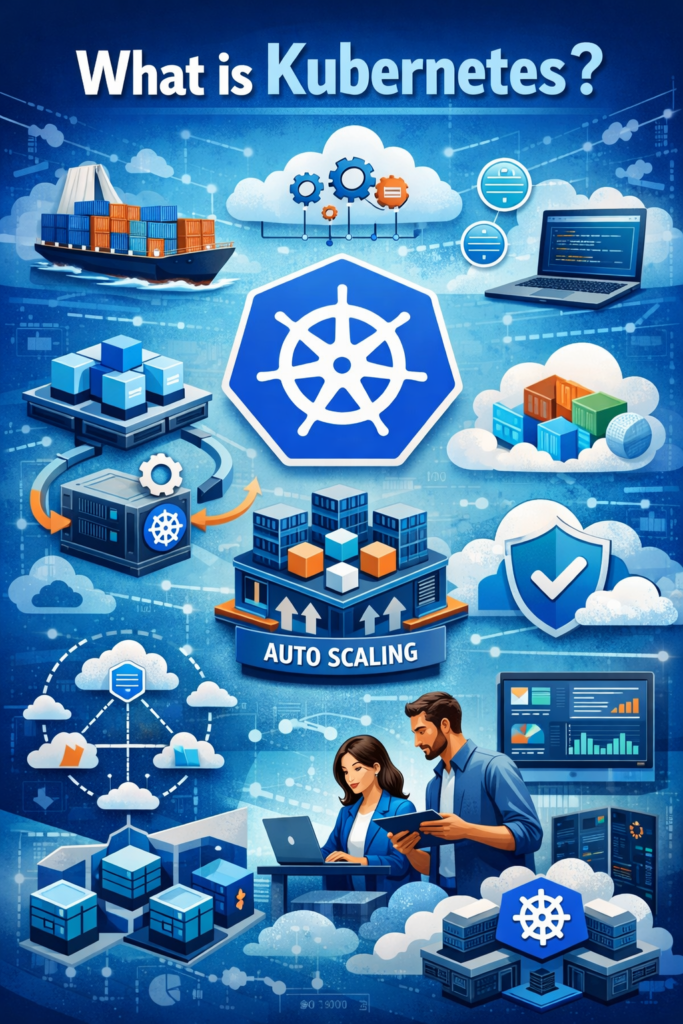
Kubernetes is an open-source system that automates the deployment, scaling, and management of containerized applications.
To understand where it came from, we have to look at Google.
Long before Docker became popular, Google was already running billions of containers every week. They managed this massive scale using a secret internal tool called Borg. Borg was powerful—it scheduled jobs, fixed crashes, and managed thousands of servers efficiently. Later, they built a second system called Omega to test new ideas.
The system is not just a copy of Borg. It is a brand-new system built from scratch. Google took the best lessons learned from Borg and Omega and released The system as open source. They gave it to the world so everyone could run software with the same power as Google.
Why Use It? The Problem It Solves
When Kubernetes first launched, people thought it was just a tool to keep containers running. But it turned out to be something much bigger.
The system is the Infrastructure Abstraction Layer.
Here is a simple way to think about it:
- Windows/Linux is an Operating System (OS) that hides the complex hardware details of your laptop. You don’t need to know exactly which CPU chip you have to open a web browser.
- K8S acts like an OS for the cloud. It hides the underlying servers.
The “Universal Adapter”
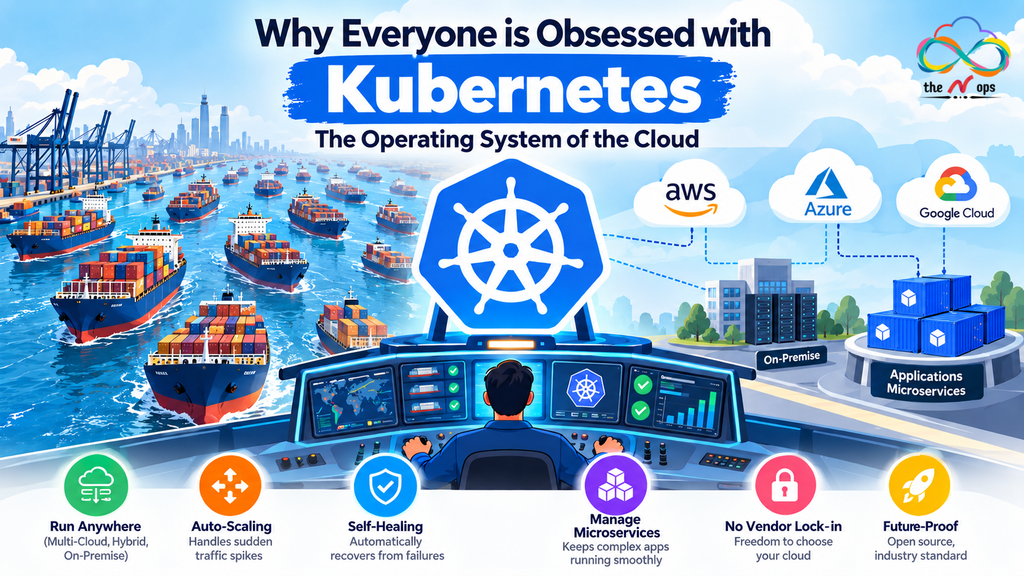
Whether you are using Amazon Web Services (AWS), Microsoft Azure, Google Cloud (GCP), or a physical server in your own basement, Kubernetes looks the same.
You tell Kubernetes: “I need 3 copies of my app running.” The system talks to the hardware and says: “Make it happen.”
You don’t need to worry about the specific cloud provider underneath. This is why we call Kubernetes The Operating System of the Cloud.
Use Cases
When should you actually use The platform ? Here are the most common scenarios:
- Multi-Cloud Strategies: You want your app to run on AWS and Azure at the same time to ensure it never goes down.
- Hybrid Cloud: You need to keep sensitive data on your own servers (On-Premise) but want to use the public cloud for extra processing power.
- Microservices: Your application is broken into 50 small pieces (services). Managing them manually is impossible; Kubernetes automates the communication between them.
Case Study: How Pokémon GO Used K8s
Why did every major tech company (AWS, Azure, Red Hat, VMware) agree to support K8s? Because it offers freedom.
Here is a summary of why it is the industry standard:
- No Vendor Lock-in: This is the biggest benefit. If you build your app for AWS proprietary tools, you are stuck with AWS. If you build for the platform, you can move your app to Azure or Google Cloud whenever you want.
- Future-Proof: The technology is managed by the Cloud Native Computing Foundation (CNCF), not a single corporation. It is a neutral “horse to bet on.”
- Portability: You can write code on your laptop, and it will run exactly the same way on a massive production server.
- Self-Healing: If an application crashes, the system restarts it automatically. You don’t have to wake up at 3 AM to fix it.
The Bottom Line: The system gives you confidence. It ensures that your infrastructure is flexible, scalable, and ready for whatever the future brings.
One Comment